Routes and continuity
Four compatible routes, a continuous shared atlas interface and a simultaneous endpoint sliding witness under their stated checks.
Inside the workshop · October 22, 2026
Five completed checkpoints beyond our first guide’s evidence edition. A real mapping breakthrough, a better question about fabric, and the tests that still keep a blouse off the character.
Follow the evidence ↓In our first receptionist workshop guide, a tiny routing trap stopped the garment map before it could form. The next five completed passes changed that picture. Routes now reach all four intended destinations. A shoulder interface now stays continuous between its measured points. And a carefully limited sliding experiment avoids the endpoint contradictions that made an earlier construction look impossible.
The surprising part is what those passes did not deliver: cloth. A body map can be geometrically sound and still be a poor instruction for a piece of fabric. This update follows the difference, using the saved failures alongside the improvements.
V21 had left the pitch junction enclosed by occupied triangle corners. Adding detail nearby had not given the route a way out. V22 planned the routes together instead of letting each one consume space greedily. One conforming midpoint split allowed four compatible paths to reach their anatomical destinations while retaining correspondence to the original body.
That was a genuine routing milestone. The next image also shows its limit: the first emitted atlas still contained 21 reversed triangles. Finding four paths did not make the mapped garment surface valid, and no fitting followed.
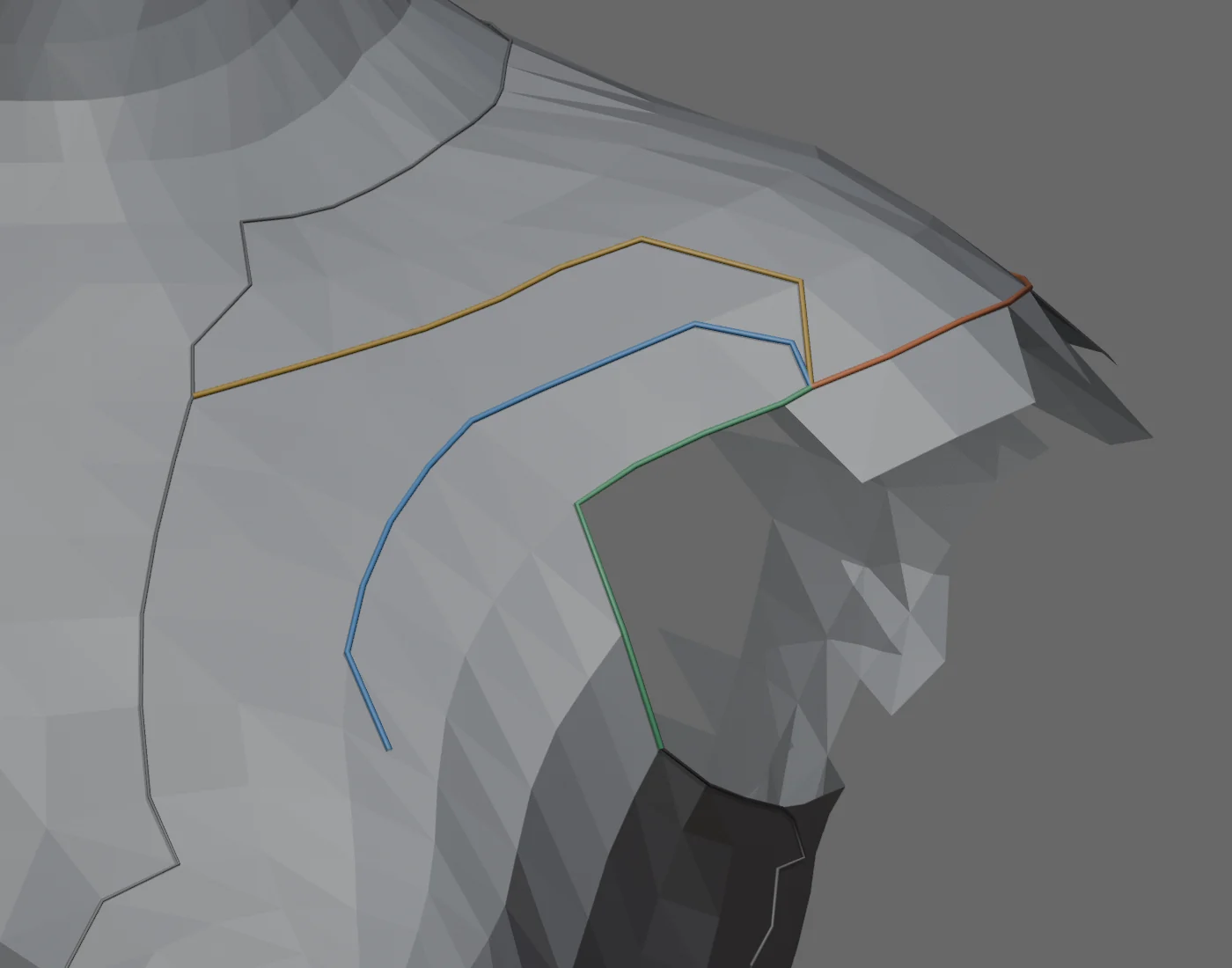
Four color coded routes reach the shoulder, fold, bust and medial top destinations after one conforming midpoint split. This is the routing milestone; it does not show a valid atlas or garment fit.
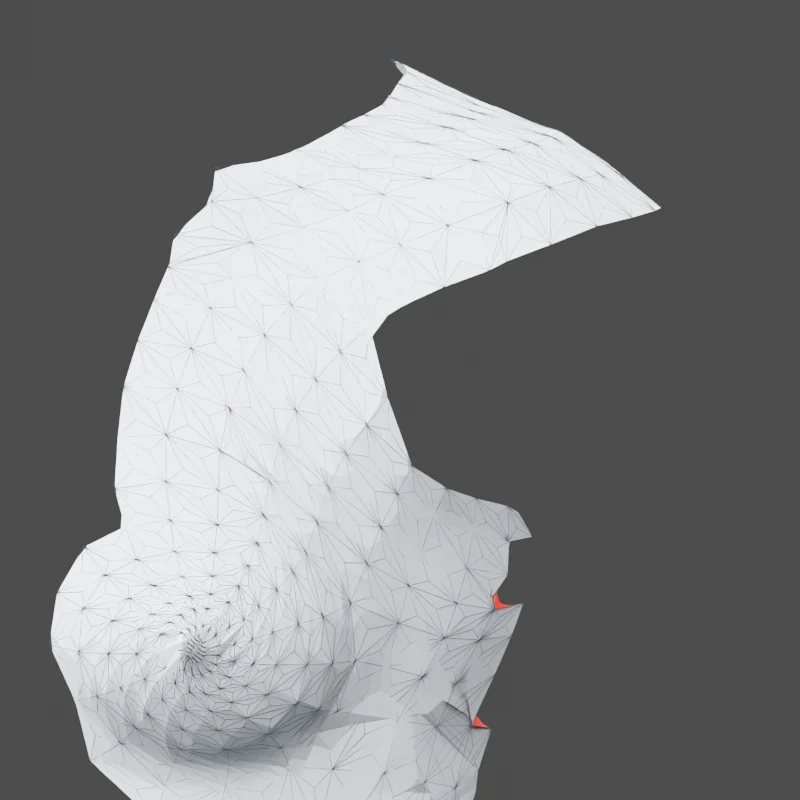
V22 atlas diagnostic with the remaining inverted faces highlighted in red. Routing had succeeded, while the emitted surface still failed with 21 inversions and no fitting was attempted.
The lesson: when several routes must coexist, solve their shared junction. A successful path planner is still only one prerequisite for a surface.
V23 removed those 21 coarse mapped inversions using a more exact surface representation. It then exposed a subtler failure: two charts could agree at their stored boundary stations while tracing different physical curves between them. The continuous audit found a gap of about 2.85 mm. The matched shoulder views below show why an endpoint-only check had been too reassuring.
V24 inserted the intervening route corners into the source boundaries and made the incident maps share the same physical curve. Across 84 paired intervals, the saved native checks passed the existing position, tangent and normal limits. The repaired atlas uses 792 vertices and 1,502 triangles; the original pattern remains the material reference.
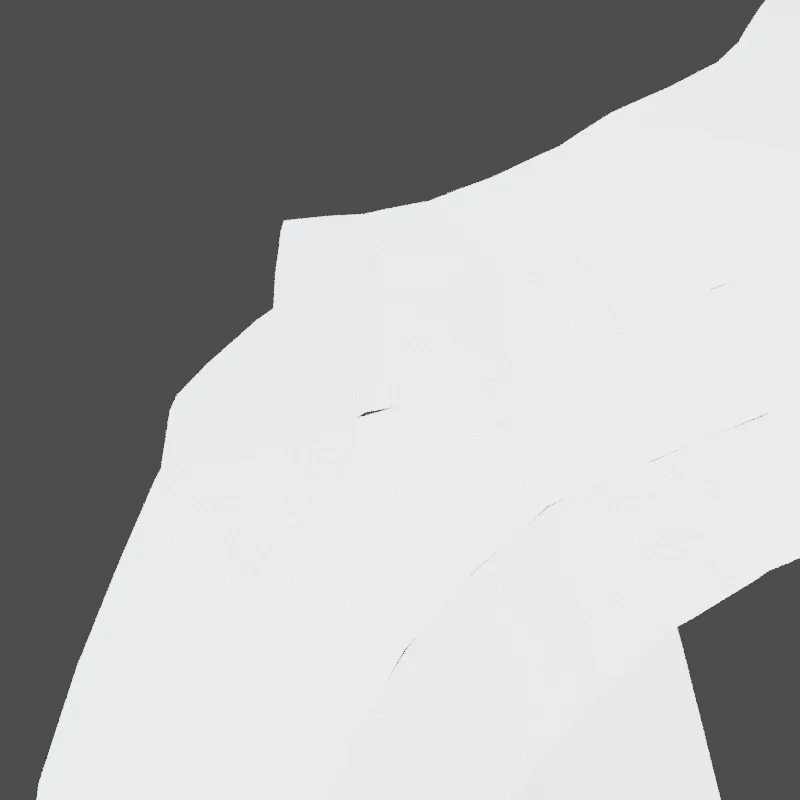
Matched V23 shoulder view. Coarse face inversions are gone, but visible hairline cracks agree with the continuous audit: matching endpoints concealed a 2.849575 mm gap between interface stations.
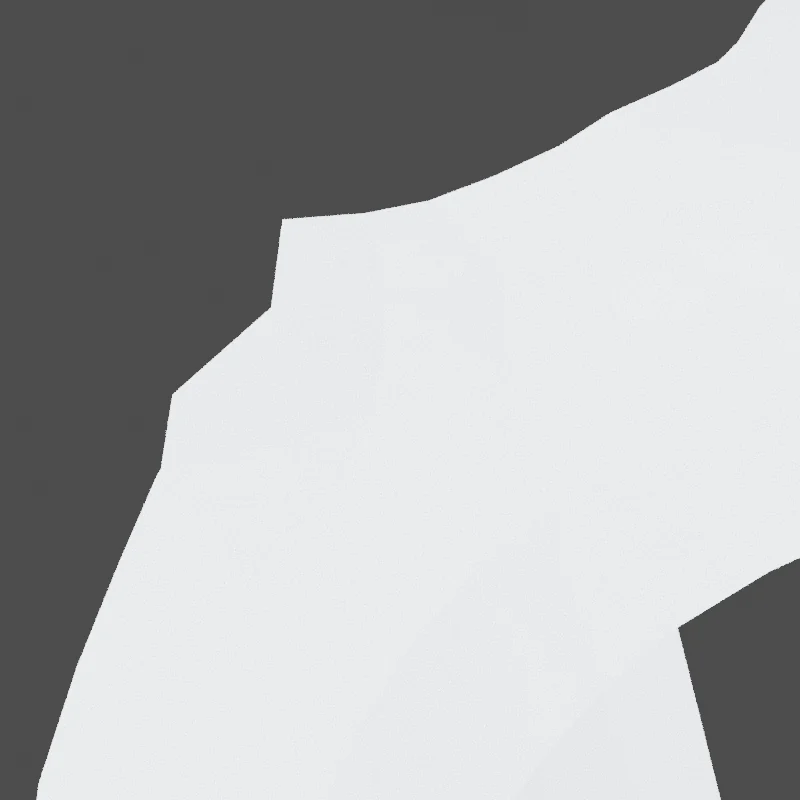
The same shoulder framing after the V24 shared curve amendment. The cracks close, and complete saved/native checks reduce the maximum interface gap to 5.36e-10 mm.
| Check | V23 | V24 | Existing limit |
|---|---|---|---|
| Maximum position gap | 2.849492 mm | Below 0.001 mm | 0.001 mm |
| Paired tangent break | 94.236346° | Below 0.01° | 0.01° |
| Geometric normal break | 29.803181° | 15.271431° | 20° |
The lesson: inspect what happens along an entire join, including corners. Identical endpoints can conceal incompatible surfaces.
The exact atlas and the coarse solver interface are different representations. V24 tested whether the old simulation triangles could reproduce the mapped shape faithfully. They could not: the saved-file recheck found a maximum discrepancy of approximately 17.93 mm against a 0.01 mm limit, with 25 reversed faces.
V25 tried one bounded topology candidate. The result improved some counts but still failed: approximately 17.91 mm of transfer error and 15 reversed faces remained. The failed candidate was kept as a diagnostic. It was not fed into cloth simulation, substituted into the character or called a finished garment.
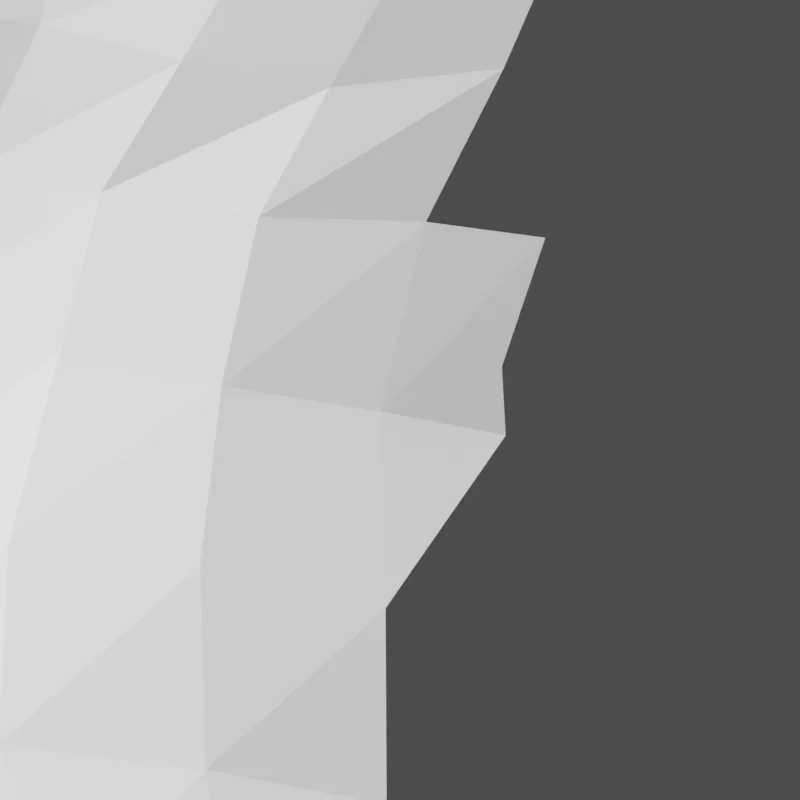
Exact qualified atlas surface at the solver diagnostic region. This is the continuous reference geometry used to test transfer fidelity.
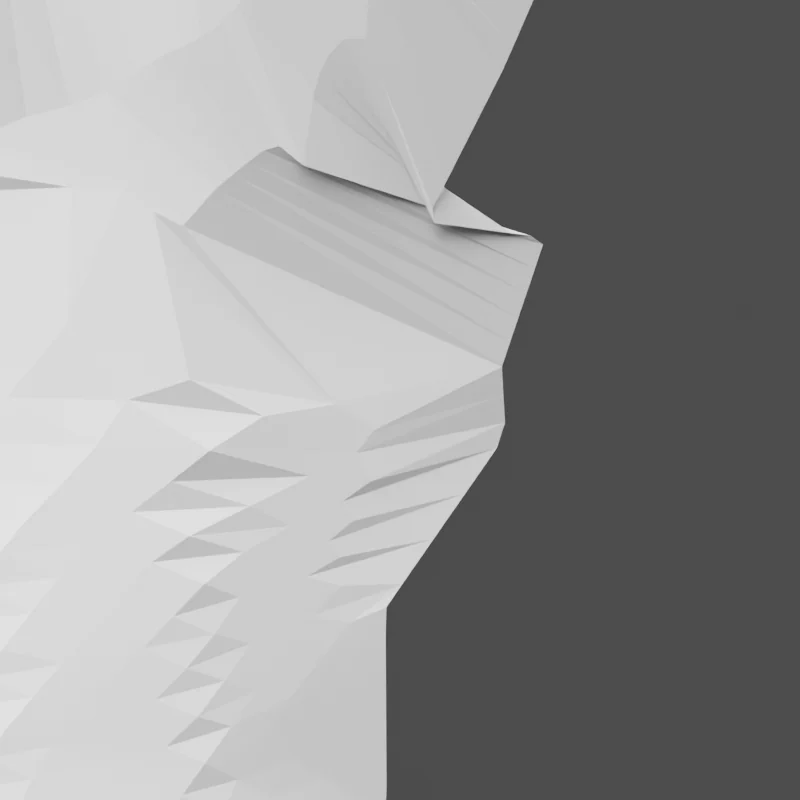
The tested coarse solver transfer at the same region collapses and reverses faces. Native reopen reproduced a 17.932656 mm maximum discrepancy against a 0.01 mm limit.
We had shown how to describe a continuous anatomical surface. We had not shown how fabric could reach that surface while preserving its own dimensions.
The rest-pattern study made an important distinction. Anatomical landmarks help describe a body, but that does not make each one a physical pin holding fabric in place. Treating every atlas partition landmark as a fixed material attachment created three named endpoint contradictions. Even the apparent 8 mm alternative constrained endpoints to artificial balls; it did not represent general tangential sliding.
V26 classified 2,716 relationships in a separate derivative specification, retaining all 34 real shoulder seam stations. The original pattern, body and historical definitions stayed unchanged. The authored bust point, inherited atlas bust guide and dart were kept distinct rather than silently replacing one with another.
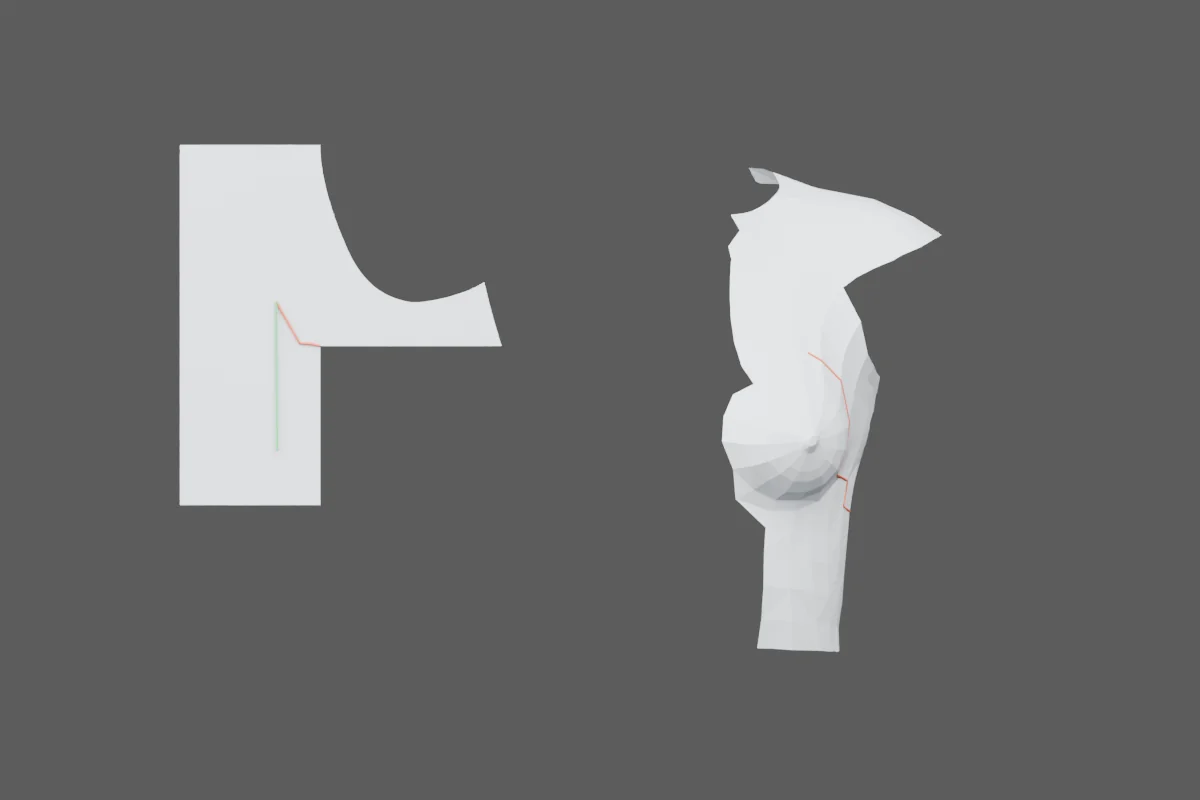
Diagnostic comparison of the unchanged flat rest pattern and mapped destinations. It motivated the endpoint feasibility study; it is not a wearable panel or a fitted garment.
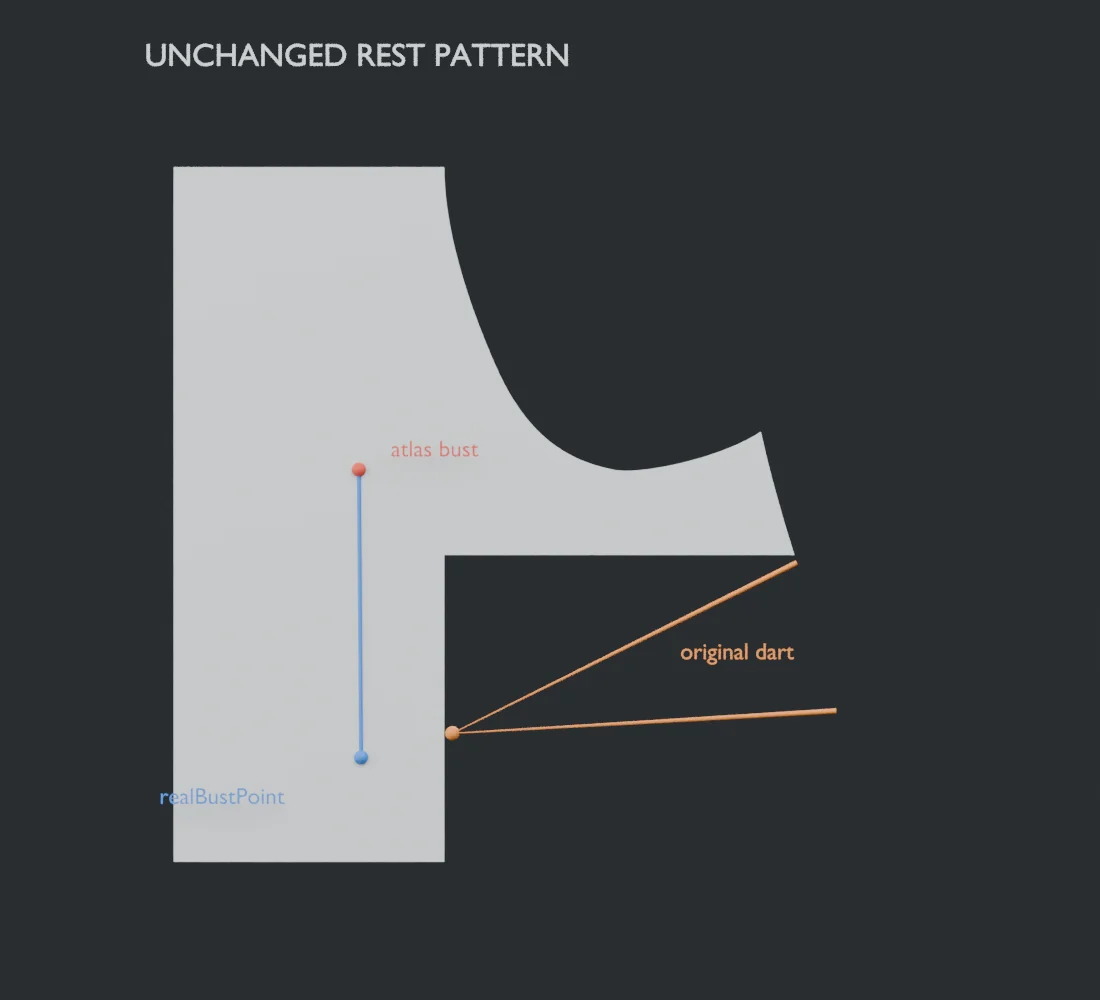
The unchanged rest pattern keeps the authored real bust point, inherited atlas bust guide and original dart distinct. The sliding study did not rewrite the source pattern.
The principal search still failed: 18 of 903 tested endpoint pairs exceeded the upper threshold. Independent review found a feasible combination in the unchanged eligible contact pools. The single bounded repair selected a simultaneous sliding witness with zero upper-threshold contradictions across all 903 tested endpoint pairs. Its largest endpoint-pair distance-to-rest-path ratio was 1.491119×, below the 1.5× screen.
This is a necessary endpoint test. It does not measure the full garment’s strain, prove the 0.5× lower bound, establish ease or collisions, or construct a continuous wearable surface. The sparse colored paths below describe selected contact trajectories; they are not a blouse and are not sewn seams.
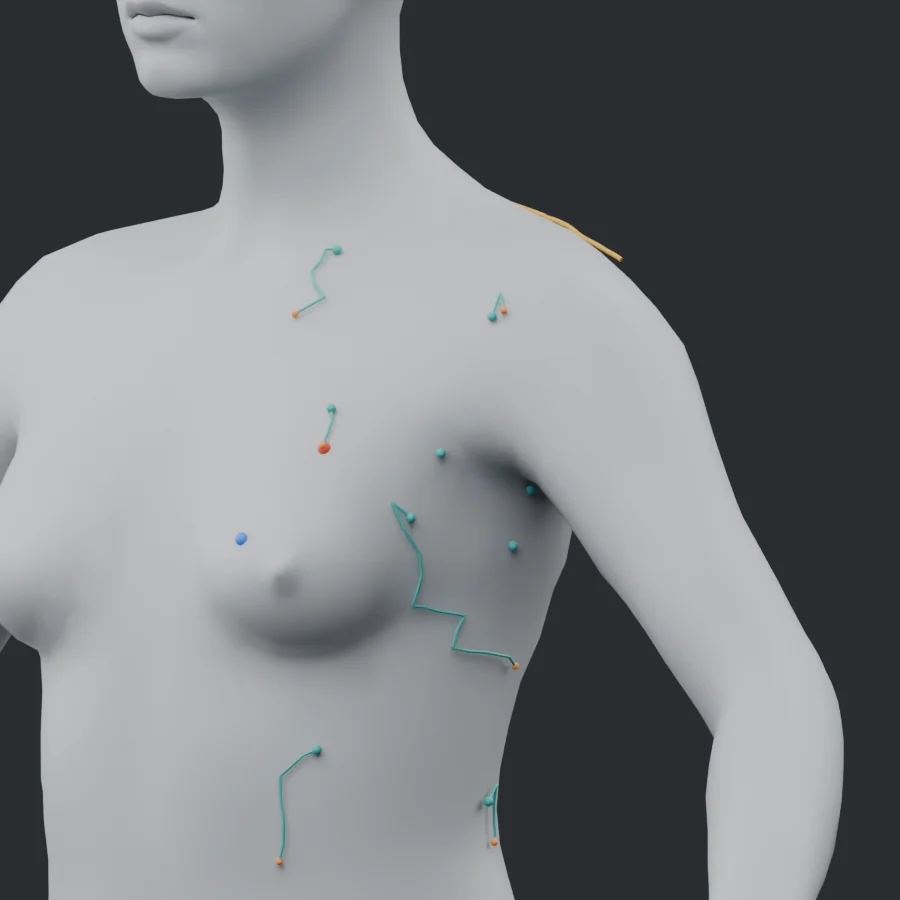
Selected contact trajectories for the simultaneous sliding witness. All 903 tested endpoint bounds avoid an upper-stretch contradiction, but these sparse paths are not seams, cloth, or a blouse surface.
The lesson: distinguish a construction guide from a real attachment. A failed overconstrained placement is not proof that the original pattern cannot fit.
V26 stopped before static initialization. The original front shoulder rest length and the placed V15 partner differ by 1.353048 mm, exceeding the existing 1 mm criterion. Their original rest stitchlines agree closely; the mismatch is not evidence that the pattern lacks material. A separately versioned correction of the posterior shoulder’s placed pose was the proposed next step at that cutoff, preserving pattern dimensions, station correspondence and the existing posterior checks.
The solver-interface failure also remains separate and unresolved. No fitting, seam joining, garment export or complete assembly acceptance followed the endpoint witness. Hair experiments during these checkpoints still failed artistic review; the selected predecessor was preserved, with no failed study propagated to the second receptionist.
Four compatible routes, a continuous shared atlas interface and a simultaneous endpoint sliding witness under their stated checks.
At V26, shoulder placement and solver transfer failed their gates. Static initialization, cloth fitting and joining had not run.
No new artistic or owner acceptance, Unreal import, animation, runtime or GAME integration is established by these diagnostics.
Small breakthroughs. Kept in proportion.
Explore the full character workshop ↗All development updatesThis first-party development report covers completed R4-V22 through R4-V26 checkpoints on October 22, 2026. It was checked against their saved progress records, measured results, native-readback receipts and original image manifests. This edition stops at V26. Later revisions, including V27, are excluded; the blocked-state descriptions above refer to that checkpoint rather than the latest working model. An independent review checked the selected numerical claims and all nine original figures. The web page itself does not rerun Blender or certify later revisions.
All nine figures are actual local Blender development diagnostics. Web derivatives retain each full composition with proportional resizing. No new AI images were generated. Editorial preparation used AI assistance; descriptions preserve failures and separate engineering checks from artistic acceptance and game integration. See the original guide’s source and licensing notes for the retained character foundations and concept-art distinctions.